
Carmen
TEAM
CONDUCTOR
Keren Kagarlitsky
STAGING AND CHOREOGRAPHY
Wim Vandekeybus
SCENOGRAPHY
Sylvie Olivé
COSTUME DESIGN
Isabelle Lhoas
LIGHTING DESIGN
Nicolas Olivier
CHORUSMASTER
Jan Schweiger
DRAMATURGY
Koen Bollen
CAST
CARMEN
Raehann Bryce-Davis
29 May 2026 · 02, 07, 09, 12, 21, 25, 28 Jun 2026
Josy Santos
31 May 2026 · 03, 05, 10, 13, 20, 23, 26 Jun 2026
DON JOSÉ
Joel Prieto
29 May 2026 · 02, 07, 09, 12, 21, 25, 28 Jun 2026
Kyungho Kim
31 May 2026 · 03, 05, 10, 13, 20, 23, 26 Jun 2026
ESCAMILLO
Sakhiwe Mkosana
29 May 2026 · 02, 07, 09, 12, 21, 25, 28 Jun 2026
Leon Košavić
31 May 2026 · 03, 05, 10, 13, 20, 23, 26 Jun 2026
MICAËLA
Maeve Höglund
29 May 2026 · 02, 07, 09, 12, 21, 25, 28 Jun 2026
Sarah Yang
31 May 2026 · 03, 05, 10, 13, 20, 23, 26 Jun 2026
ZUNIGA
Samson Setu
MORALÈS
Leander Carlier
FRASQUITA
Sawako Kayaki
MERCÉDÈS
Jessica Stakenburg
LE DANCAÏRE
Maxime Melnik
LE REMENDADO
Emanuel Tomljenović
ENSEMBLES
ORCHESTRA
Symfonisch Orkest Opera Ballet Vlaanderen
CHORUS
Koor Opera Ballet Vlaanderen
Kinderkoor Opera Ballet Vlaanderen
DANCE
Dansers Opera Ballet Vlaanderen
Ultima Vez
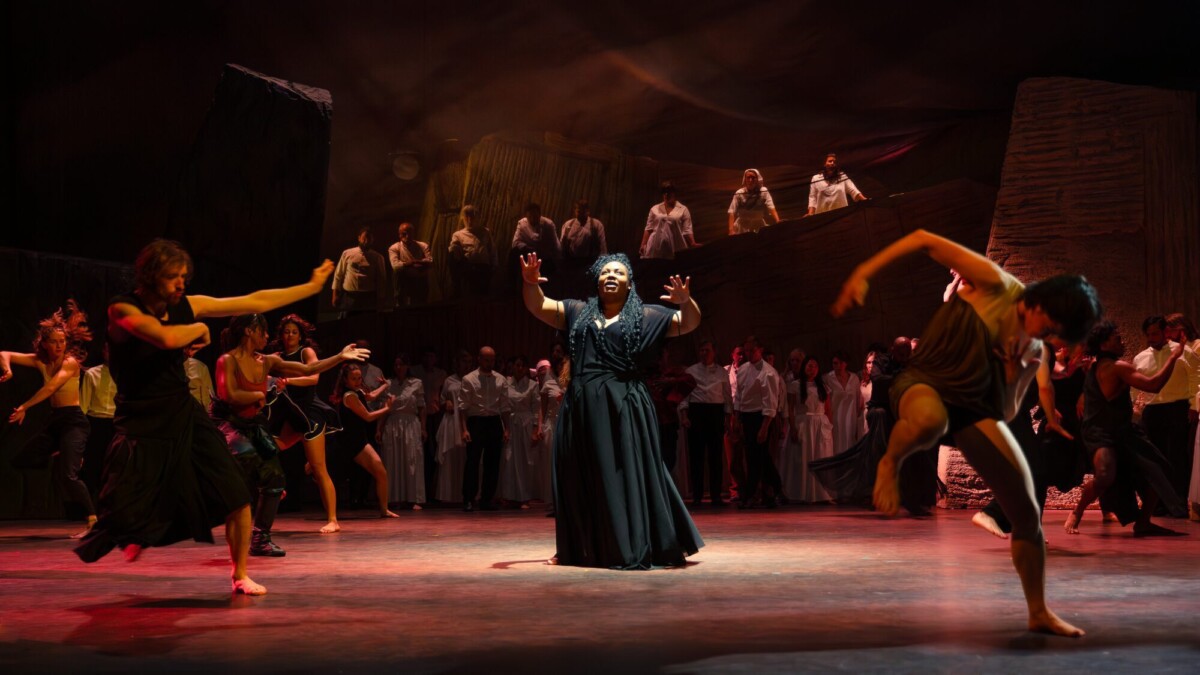
The free-spirited Carmen yearns for love, but her unstoppable urge for independence overpowers every other feeling. The obsessive and conservative soldier Don José falls completely under her spell and sacrifices everything he holds dear. When Carmen leaves him for the charismatic Escamillo, the unbearable tension drives them to the limit. Georges Bizet's Carmen is undeniably one of the masterpieces of the opera repertoire, with captivating melodies and irresistible rhythms that stick in your head for days. Director and choreographer Wim Vandekeybus takes on one of the largest productions that Opera Ballet Vlaanderen has ever staged, with, in addition to the Symphony Orchestra, ten soloists, the entire Chorus and Children's Chorus, and a whole host of dancers. On the one hand, Vandekeybus works out the deeper psychology of the characters through his characteristic and intense movement language. On the other hand, he uncovers a ritual layer that exposes the intuitive and almost mythological power of the work.
Interview with Wim Vandekeybus about Carmen
by Koen Bollen
'How do you define the opposite of love? As jealousy? Greed? For me, Carmen is an investigation into the complex game of desire, power and ego', says Wim Vandekeybus.
With Carmen you are tackling an opera for the first time. What fascinates you about this medium?
For a long time, I was critical: I thought that the medium of opera brought too many limitations with it because of its grandeur. But after my experiences with film, including large-scale projects, my perspective changed, although I initially didn't want to make a classical opera. In the nineties I worked with the contemporary composer Fausto Romitelli, but after his untimely death I started to have doubts again. Now I slowly feel that I can also find my own form within the great opera machine, on the one hand by adapting, on the other hand by letting the machine move with me.
I have long had a passion for Carmen because of the film by Carlos Saura about that opera with beautiful flamenco dance in it. That powerful, expressive movement language has always appealed to me, although I won't work with flamenco myself. My directing is always action-driven: the emotion is created by action and in this opera also by the interplay between dancers and singers. On the one hand I want to tell the story of Carmen clearly, with the psychology of the characters as its core, on the other hand I also make room for an abstract layer in the staging in which I want to work out the more intuitive, almost mysterious power of the work. The dancers will embody the soul of the characters.
What questions did the opera Carmen raise for you?
Carmen is much more than a simple love drama and revolves around a psychological struggle. It's about the lack of love. Love is extremely complex. How do you define the opposite of love? Jealousy? Greed? Power? Love is simply a mix of all those things. For me, Carmen is an investigation into the complex game of desire, power and ego. Take Don José: his love is connected to a deep-rooted maternal bond. Carmen, on the other hand, is free, a rebel, a freedom fighter. That makes her powerful, but we must be careful not to let her fall into the cliché of the femme fatale, the temptress who makes men suffer. She is much more layered than that.It's also pointless to portray her as a victim, a tragic immigrant. She is more of a guru, a leading figure within her female environment. For me it's essential to see her as a human being of flesh and blood.I'm fascinated by the tension between men and women in this story. Don José is engaged to Micaëla, but he falls in love with Carmen. She then leaves him for Escamillo. Ultimately everything revolves around Carmen herself. For me she embodies the earthly. Micaëla then represents the pure and the almost divine. Carmen is instinctive, almost animalistic, like a scorpion that seduces and then destroys. I have always tended to emphasise the animal in man. In the animal world, temptation also exists, Carmen is also like a peacock spreading its feathers – beautiful and dangerous. That contrast makes her so fascinating. That animality is something I also want to bring back in the dancers. How beautiful would it be if fifteen dancers together form one bull that Carmen can ride, like Europa who travelled across the ocean on Zeus in the form of a bull? Such archetypes and myths inspire me tremendously. The archetypes always repeat themselves in new forms and we also see the same themes returning in contemporary events. Mythology is not old-fashioned; it happens every day anew.
You often draw inspiration from rituals in your performances. What do you find so fascinating about that?
In our Western world, we have lost many rituals, while in other cultures they are still an integral part of daily life. Recently I saw a Japanese steward close an airplane door with enormous precision, attention and control: that was a ritual. With us, everything seems to have become functional, devoid of soul. In linear narrative forms – whether opera, theatre or dance – moments are needed that pull the audience out of the narrative for a moment.
Rituals can have that effect. They don't have to be collective or grand; one person can also perform a ritual in silence. Rituals cause chaos, shake people awake, open up new layers of meaning. That's why they are necessary. Rituals and their impact also change over time. As Peter Brook said: 'Performance is only relevant in the time of its relevance'. Some things lose their impact or urgency. That raises the question: Is Carmen still relevant? Do we still have to separate gender roles so strictly? Should we remain faithful to the original story?
In what sense is opera a ritual?
As soon as the lights go out and everyone voluntarily surrenders to watching, a kind of ritual is already created. Even buying a ticket is like a contract in which you as a spectator agree to participate in the ritual that will be shown. It is a completely artificial situation, but it still works.
You have, like Florentina Holzinger, a very physical movement language and you go to great lengths to present things on stage in an almost realistic way?
While I used to be more of a rebel, I'm now a bit calmer. Florentina Holzinger is precisely in that phase in which she wants to break through expectations. And that's fantastic. That energy is necessary in our world. That's why her work is so important. I don't feel the need to still bring extremes on stage. The poetic or suggestive side has become more important in my work. What I do find important is a physical truth. When dancers do something, I don't want them to pretend. I want to see the heroic side of the dancer who trains every day. Why shouldn't we really let them show what they can do?
More info & tickets through here: https://www.operaballet.be/en/...
Premiering 29/05/2026 at Opera Antwerp!
TEAM
CONDUCTOR
Keren Kagarlitsky
STAGING AND CHOREOGRAPHY
Wim Vandekeybus
SCENOGRAPHY
Sylvie Olivé
COSTUME DESIGN
Isabelle Lhoas
LIGHTING DESIGN
Nicolas Olivier
CHORUSMASTER
Jan Schweiger
DRAMATURGY
Koen Bollen
CAST
CARMEN
Raehann Bryce-Davis
29 May 2026 · 02, 07, 09, 12, 21, 25, 28 Jun 2026
Josy Santos
31 May 2026 · 03, 05, 10, 13, 20, 23, 26 Jun 2026
DON JOSÉ
Joel Prieto
29 May 2026 · 02, 07, 09, 12, 21, 25, 28 Jun 2026
Kyungho Kim
31 May 2026 · 03, 05, 10, 13, 20, 23, 26 Jun 2026
ESCAMILLO
Sakhiwe Mkosana
29 May 2026 · 02, 07, 09, 12, 21, 25, 28 Jun 2026
Leon Košavić
31 May 2026 · 03, 05, 10, 13, 20, 23, 26 Jun 2026
MICAËLA
Maeve Höglund
29 May 2026 · 02, 07, 09, 12, 21, 25, 28 Jun 2026
Sarah Yang
31 May 2026 · 03, 05, 10, 13, 20, 23, 26 Jun 2026
ZUNIGA
Samson Setu
MORALÈS
Leander Carlier
FRASQUITA
Sawako Kayaki
MERCÉDÈS
Jessica Stakenburg
LE DANCAÏRE
Maxime Melnik
LE REMENDADO
Emanuel Tomljenović
ENSEMBLES
ORCHESTRA
Symfonisch Orkest Opera Ballet Vlaanderen
CHORUS
Koor Opera Ballet Vlaanderen
Kinderkoor Opera Ballet Vlaanderen
DANCE
Dansers Opera Ballet Vlaanderen
Ultima Vez
Agenda


